What is CBD oil for? What is known and what is not
What the authorities have written about CBD, what is still unknown and how to compare products by numbers, not promises.
Written by The shop's editorial team · Texts checked against the cited sources
Published on 11 October 2026 · 7 min read
What CBD oil is and what it is not
CBD oil is an extract of industrial hemp that contains cannabidiol (CBD), dissolved in a vegetable carrier oil. CBD is one of the more than one hundred cannabinoids the plant makes, and it is not THC, the compound that causes the “high”. The difference is explained in CBD vs THC: what sets them apart, and the basics are in What is CBD: a beginner's guide.
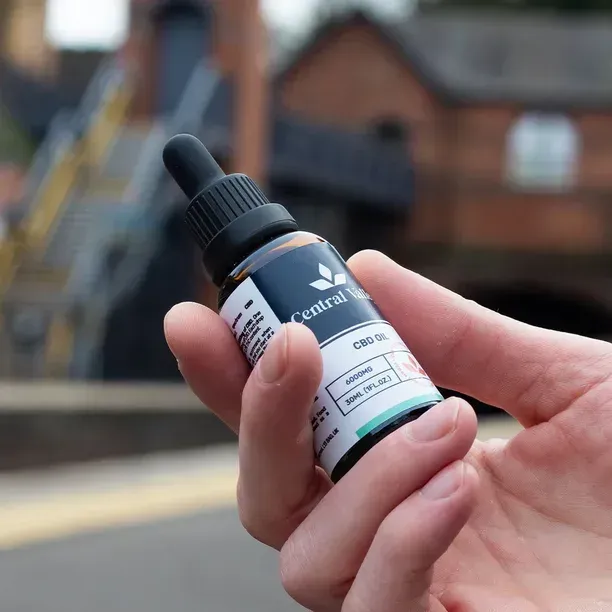
About a bottle of CBD oil you can state facts: how many milligrams of CBD it holds, in what volume, which type of extract it contains and under which regime it is sold (usually as a cosmetic). What it “does” in the body cannot be stated, and the next sections explain why.
What the authorities have written about CBD
Three things have been written down by institutions, not by sellers.
- One medicine with CBD is authorised in the EU: Epidyolex, authorised in 2019 for seizures in Lennox-Gastaut and Dravet syndromes (together with clobazam) and, from 2021, for those in tuberous sclerosis complex (EMA). It is dispensed on prescription and used under medical supervision; it is not a shop oil.
- The WHO Expert Committee on Drug Dependence concluded in 2018 that pure CBD shows no potential for abuse or dependence, and described the evidence for its use in other situations as preliminary (WHO).
- There is no authorised health claim for CBD in the EU (Regulation (EC) No 1924/2006). A serious seller describes the product's composition and form, not effects on health.
What is still not known
Many people look for the answer to “what is it good for?” in connection with sleep, stress or pain. A shop has no answer it could give: in 2018 the WHO called the evidence preliminary, and the EU has authorised no health claim for CBD. The result of a study with one product and one amount does not carry over automatically to another bottle.
Safety has open parts too. In February 2026 EFSA set only a provisional safe level of intake for CBD as a novel food, about 2 mg a day for a 70 kg adult, and wrote that safety cannot be established for people under 25, for pregnant or breastfeeding women and for people taking medicines. That figure is not a dose and does not apply to cosmetics; the explanation is in Mg and % on a CBD label: how to compare products.
What “benefits” means on websites and labels
Lists of “CBD oil benefits” are, as a rule, promises that EU law does not allow a seller to make. Before you believe or dismiss one, ask four questions:
- Who says it: an authority (EFSA, EMA, WHO) or a seller?
- Which product it is about: an authorised medicine or a shop extract?
- Who was studied: people, animals or cells in a laboratory?
- What amount and form were used, compared with those on your bottle?
If a shop promises that CBD oil has an effect on health, it is breaking EU rules — a good reason to shop elsewhere.
How products differ
Two bottles labelled “CBD” can be very different. A few things set them apart, and the numbers are printed on the pack. The details are in the articles on full spectrum, broad spectrum and isolate and on mg and percentages.
| What you compare | What it means | Where to look |
|---|---|---|
| Spectrum | Full spectrum keeps the hemp's other compounds, with traces of THC; broad spectrum keeps them without THC; isolate is purified CBD | The label and the batch lab report |
| Strength | The percentage shows how concentrated the oil is: 10 % means 100 mg of CBD in one millilitre | The label |
| Milligrams in the whole bottle | Percentage × 10 × millilitres: a 10 ml bottle at 10 % holds 1000 mg | The label |
| Milligrams per drop | The milligrams in one millilitre divided by 20; at 10 %, about 5 mg a drop (an approximate figure) | Worked out from the numbers on the label |
| Form | Dropper oil, capsules with a fixed amount or a cream for the skin; the regime on the label (cosmetic, food) says how it is used | The label |
How to check what is in the bottle
The figure on the label is the maker's promise. What was measured is shown by the lab report (COA) of your batch. The steps are in How to read a lab report (COA) in five steps, and how we work is on the Lab testing page. Four quick checks:
- The batch number on the bottle is the same as on the report.
- The report names the laboratory and the method used.
- The measured CBD is close to the figure on the label; a small deviation, usually around ±10 %, is normal.
- THC is given as a number or as “not detected”.
Safety: medicines, pregnancy, drug tests
CBD products are sold only to people aged 18 and over and are kept out of children's reach. Beyond that, four situations matter in particular:
- Medicines: CBD is processed by liver enzymes that also process many medicines. The leaflet of the medicine with CBD, Epidyolex, warns about interactions and about raised liver enzymes. If you take medicines or have a liver condition, ask your doctor or pharmacist.
- Pregnancy and breastfeeding: EFSA could not establish safety. The doctor decides, not the label.
- Age: under 25, EFSA could not establish safety.
- Drug tests: tests look for THC, not CBD. A full spectrum extract contains traces of THC; isolate and broad spectrum should have no detectable THC, but even then there is no guarantee. Details in CBD vs THC.
And the law?
In Romania CBD is not a narcotic — the Court of Justice of the EU ruled so in the Kanavape case (C-663/18) — and the law controls THC. CBD oils are usually sold as cosmetics. CBD added to food and supplements is a “novel food” (Regulation (EU) 2015/2283) and, as of October 2026, has no EU authorisation yet. The full picture is in Is CBD legal in Romania?
Where to go next
If you are choosing a product, start with the numbers on the label: Your first CBD oil: what to check before you buy takes you through them one by one. CBD oils and capsules are in the catalogue; on a product page you see the milligrams of CBD, the volume and the regime.
Sources
- WHO Expert Committee on Drug Dependence: fortieth report (2018), including the cannabidiol (CBD) critical review
- EMA: Epidyolex (cannabidiol), European public assessment report and product information
- Regulation (EC) No 1924/2006 on nutrition and health claims made on foods
- EFSA: Provisional safe level for cannabidiol as a novel food (9 February 2026)
- EFSA Journal: Update of the statement on safety of cannabidiol as a novel food (2026)
- Regulation (EU) 2015/2283 on novel foods
- Court of Justice of the EU, case C-663/18 Kanavape, judgment of 19 November 2020